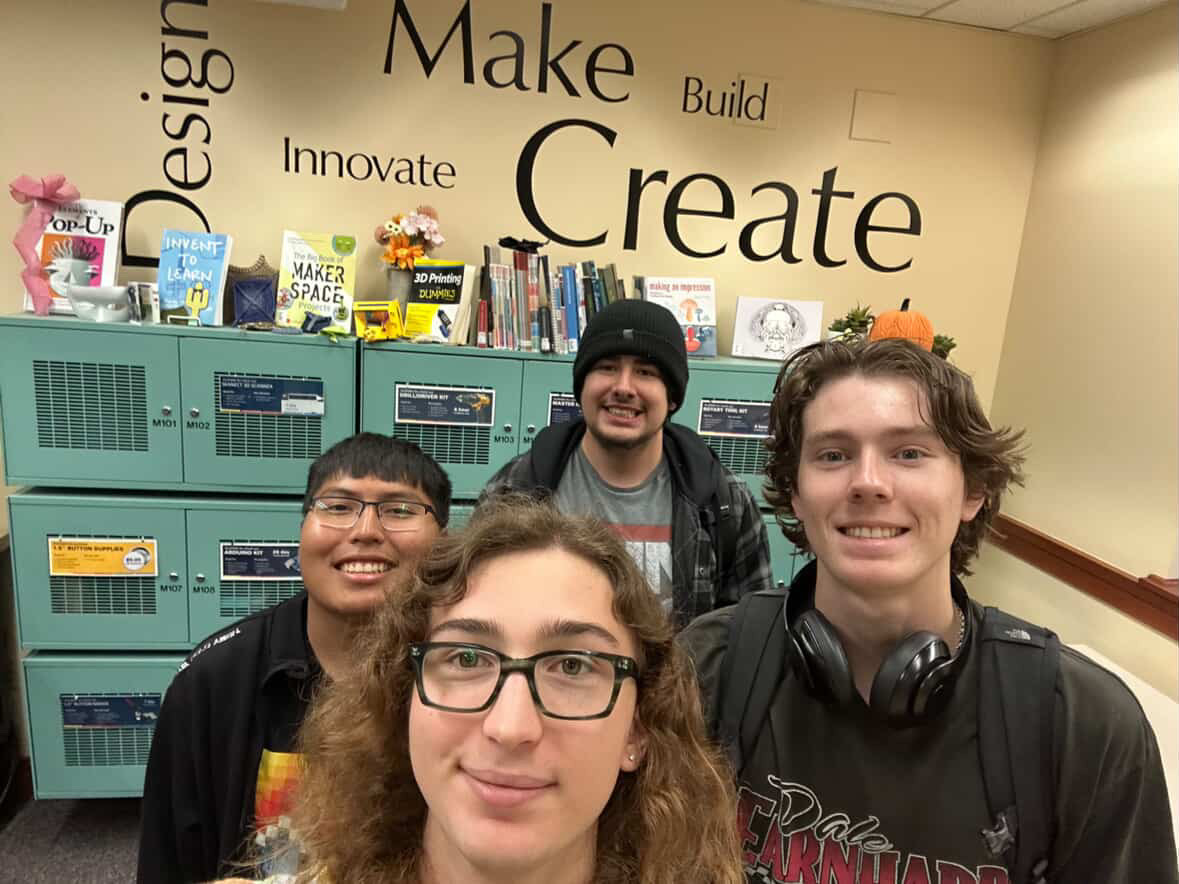


 This October, Vydell Willie continued to lead in a different kind of arena—one rooted in education, service, and thoughtful innovation. As a student at Northern Arizona University majoring in Indian Country Criminal Justice, he focused on a collaborative English 105 Solution Proposal aimed at improving campus wayfinding systems. By exploring upgrades like digital kiosks, improved maps, and clearer signage, Vydell and his team are working toward a more accessible and sustainable campus experience. “This project explores how upgraded maps, digital kiosks, and campus navigation tools could enhance accessibility and sustainability,” he explained, showing how even everyday systems can reflect environmental responsibility.
His work on campus is a form of civic engagement that centers inclusion and thoughtful design. Through research sessions at Cline Library and collaboration with classmates and instructors, Vydell connected academic learning with real-world impact. These efforts reflect a growing understanding that leadership can show up in classrooms just as much as in community spaces—especially when solutions benefit the broader population.
Outside of academics, Vydell remained deeply connected to his community through service and faith. He assisted with a church-hosted campus event, helping create a welcoming space for students to connect, reflect, and build relationships. Whether engaging with peers or supporting outreach efforts, his presence emphasized unity and care. “He participated in fellowship, helping engage with students, and visiting their booth to promote connection and unity,” he shared, highlighting how service strengthens both community bonds and personal growth.
This month also provided space for reflection as Vydell explored the deeper connections between his studies and his role as an Earth Ambassador. Through his coursework in criminal justice and Indigenous studies, he examined how justice and environmental stewardship are intertwined. These insights reinforced the importance of balance, accountability, and respect—values that guide both community leadership and environmental protection.
At the core of his journey is a growing awareness of how small actions contribute to larger change. “This month reminded me that leadership can take many forms — through learning, service, and faith,” Vydell reflected. “Every small action contributes to something larger… each experience strengthened my connection to both people and the land we share.” His ability to connect academic work, cultural values, and community service shows a holistic approach to leadership rooted in purpose.
The UNITY Earth Ambassador Program continues to uplift youth leaders like Vydell Willie who are finding innovative ways to serve their communities while staying grounded in culture and responsibility. This year’s cohort represents a generation of Indigenous youth who understand that leadership isn’t limited to one space—it exists in classrooms, communities, and everyday actions. Through education, service, and reflection, they are shaping a future that honors both people and the land.