Northeastern Region
UNITY Regional Profile
The Northeast Region consists of geographical areas and the states of Ohio, Pennsylvania, New York, New Jersey, Maryland, Delaware, Connecticut, New Hampshire, Vermont, Rhode Island Massachusetts, Maine and DC . The Western region has 14 affiliated youth councils in 12 states within the UNITY Network.
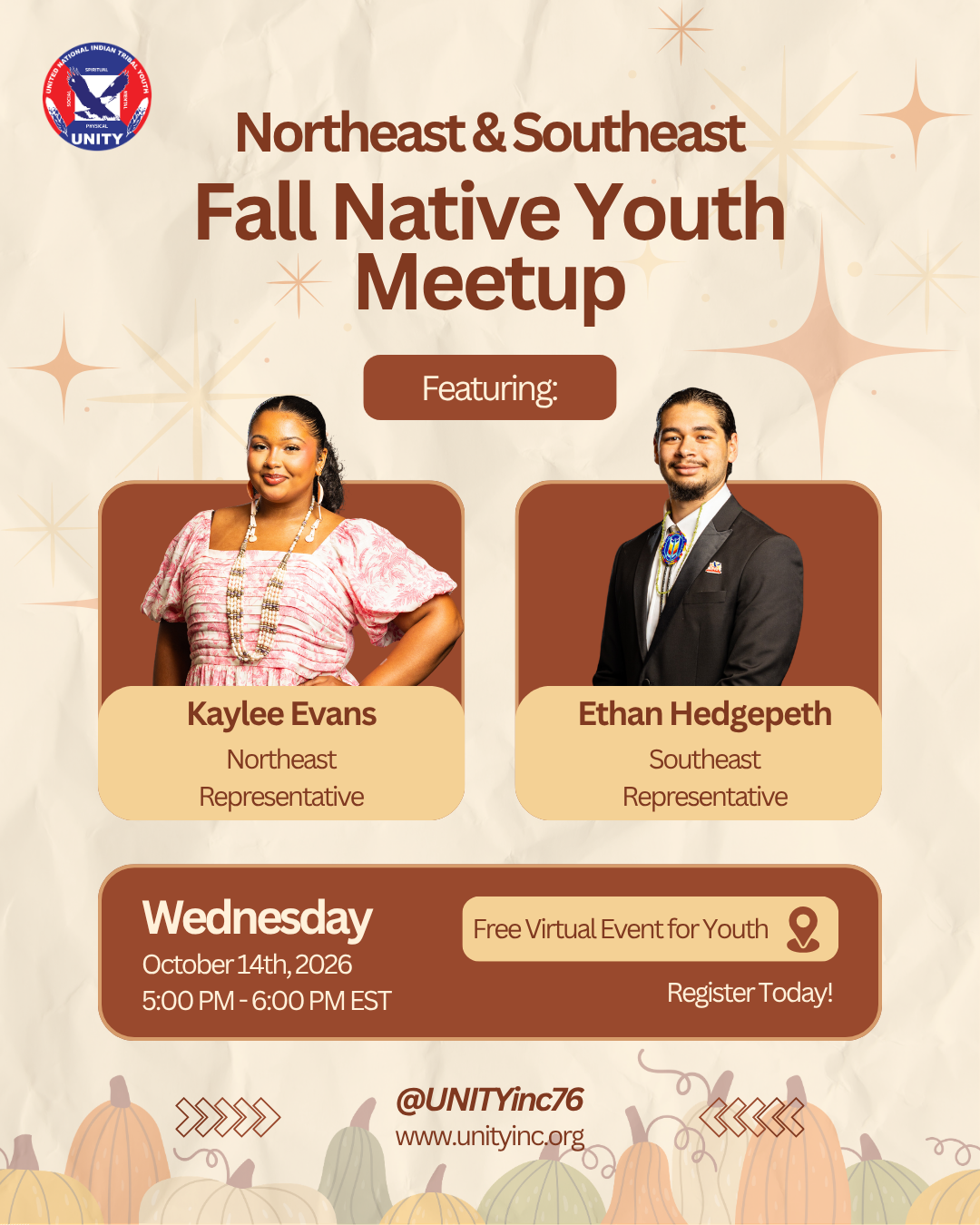
2025 Fall Native Youth Meetup
2022 SPRING NORTHEAST VIRTUAL MEET-UP
2021 Fall NORTHEAST Virtual Meet-Up
UNITY News: Northeast Updates
Northeast Regional Representative: Liliana Mars
Liliana Mars – UNITY Northeast Area Representative/Secretary
Tribes: Narragansett Tribe/Navajo Nation
Click + to learn more:
Liliana Mars is a proud Narragansett and Diné young leader committed to serving her community through advocacy, cultural preservation, and compassionate leadership. She recently graduated with honors and a 4.0 GPA from Acellus Academy and is preparing to attend the University of Rhode Island this fall, where she will pursue a degree in nursing with the goal of helping others through a career in healthcare.
Liliana began her journey with UNITY as a 2023–2024 Earth Ambassador, where she focused her platform on food sovereignty. Through this initiative, she organized food distributions within her tribal community—work she has continued as the Northeast Area Representative.
Now serving her second term on the National UNITY Council Executive Committee (2025–2026), Liliana also holds the role of Secretary, continuing to lead and support initiatives that uplift Native youth and promote wellness.
In addition to her leadership with UNITY, Liliana is the reigning Miss Sycuan Powwow Princess. In this role, she travels across the country to dance, sing, and represent the teachings and traditions of both her Narragansett and Navajo heritage. While traveling, she also proudly shares UNITY’s mission and encourages Indigenous youth to embrace their culture, voices, and leadership potential.
Beyond her public roles, Liliana is known for her kindness, humility, and commitment to helping others. She finds joy in powwow dancing, traveling with her family, caring for her dogs, and giving back to her former elementary and middle schools through volunteer work.
Driven by a lifelong passion for supporting others—whether through a smile, a kind word, or meaningful action—Liliana Mars continues to lead with grace, empathy, and an unwavering dedication to her people and community.
NORTHEAST REGION
Liliana Mars, Northeast Regional Representative/Secretary
National UNITY Council Executive Committee
Northeast Region Youth Councils
- Council for the Advancement of Young Adults
- Mohegan Youth Council
- Mashantucket Pequot Youth Council
- Aquinnah Wampanoag Tribal Youth Council
- Mashpee Wampanoag Youth Council
- Penobscot Nation Youth Council
- New Dawn Tribal Youth Council
- Seneca Nation of Indians Tribal Youth Council
- St. Regis Mohawk Tribe
- Native Connections Youth Advisory Board
- Shinnecock Nation Youth Council
- Haudenosaunee Tribal Youth Council
- Seneca Nation Native Connections Youth Group
- Narragansett Youth Council
Nizhoni Deschene, 17
Navajo Nation & Turtle Mountain Chippewa
Bethesda-Chevy Chase High School / Incoming UC Berkeley Student
Nizhoni Deschene is a citizen of the Navajo Nation and Turtle Mountain Chippewa Tribe, and an incoming undergraduate at UC Berkeley. Raised in the high desert of the Navajo Nation and later in Washington, D.C., Nizhoni developed a strong connection to the environment—from desert wildlife to urban ecosystems. He is passionate about advancing economic and environmental justice through tribal energy development, policy, and finance. As the founder of the D.C., Maryland, and Virginia UNITY Chapter, Nizhoni has mobilized Native youth around environmental action, including watershed cleanups, policy advocacy, and education. With experience in financial consulting and Indigenous energy policy, Nizhoni’s goal is to help develop sustainable, clean energy solutions for tribal nations. His leadership centers on empowering Native youth, expanding Indigenous representation in business and government, and supporting tribal sovereignty through self-determined energy futures.
Alyssa Mosley, 23, Nanticoke Lennie Lenape, New Jersey
School: Bachelor’s Degree in Business Administration (2023), Montclair State University
Platform: The Lenape Cultural Revitalization Project aims to celebrate and preserve Lenape heritage through a series of workshops focused on traditional design and clothing. Over the course of a year, participants will explore the history and significance of Lenape attire, create personal family designs incorporating meaningful symbols and colors, and learn to craft traditional pucker toes and wrap skirts. The project will culminate in a showcase at the annual powwow, with a budget allocated for materials, venue rentals, and community support. This initiative seeks to foster cultural pride and strengthen community bonds through engaging, hands-on activities and events.
Carmella Bear, 17, Penobscot, Maine
School: Senior, John Baptist Memorial High School
Platform: I am part of a cultural workshop focused on teaching Wabanaki tribes in Maine traditional dances and songs. To enhance this initiative, I plan to visit each Wabanaki community monthly and organize an annual intertribal social where communities present their learned dances and songs. The goal is to strengthen cultural ties and engagement with traditional practices. This initiative aims to foster a deeper connection to our heritage and build stronger relationships within our communities over the next 1-3 years.
Dasia Peters, 22, Mashpee Wampanoag, Massachusetts
School: Bachelors of Arts in Communications; Minor in U.S. Indigenous Studies, Bridgewater State University
Platform: The Community River Cleanup Day aims to address the severe pollution in the Mashpee River, a critical issue highlighted by recent reports of toxic algae blooms. This initiative will mobilize tribal and local community members to restore overgrown riverbanks, remove litter, and raise awareness about water quality issues. The event, coordinated by the Mashpee Wampanoag Natural Resources Department, Education Department, and Youth Advisory Committee, will include educational activities led by tribal elders and natural resources experts. Participants will learn about local plants and their cultural significance, and gain insights into environmental challenges and solutions through informational tables from various organizations, including the Mashpee Wampanoag Native Youth Environmental Ambassadors and the Save Mashpee Wakeby Pond Alliance. Scheduled for 10:00 AM – 12:00 PM and 1:00 PM – 4:00 PM, the cleanup will also feature a free lunch for all attendees. This effort seeks to restore the river, honor traditional practices, and foster community engagement in environmental stewardship.
Kiara Tanta-Quidgeon, 23, Mohegan, Connecticut
School: Master’s Degree in Public Health (2024), Columbia University; Bachelor’s Degree in Health Science (2022), Quinnipiac University
Platform: The Mohegan Educational Food Project aims to combat Type II Diabetes within the Mohegan Tribal community by enhancing the use of traditional foods. Building on the existing community garden and Mohegan Foodways program, the project will create educational resources such as toolkits and infographics to teach community members about the nutritional benefits of traditional foods, home cultivation, and diet integration. The project will involve collaboration with local stakeholders, including the garden committee and Health Department, and will begin during the Mohegan Archeological Field School this summer. Key evaluation criteria will include community engagement, quality and effectiveness of educational materials, dissemination reach, and impact on diabetes management and prevention. The project will culminate with the distribution of resources during the Wigwam Festival in late August, aligning with cultural celebrations.
Nizhoni Deschene, 16, Navajo, Maryland
School: Senior, Bethesda Chevy Chase High School
Platform: This project aims to integrate a comprehensive Native American history curriculum into high school history classes to provide a more inclusive and accurate portrayal of Indigenous peoples. The curriculum will address gaps in traditional history education, foster cultural sensitivity, and promote critical thinking. Key components include curriculum development, teacher training, resource acquisition, and community engagement. The initiative will be implemented over a year, with phases for development, training, implementation, evaluation, and refinement. Evaluation will focus on student engagement, teacher preparedness, community feedback, academic achievement, and long-term impact. As a Native high school junior, my role will involve connecting with Indigenous communities and scholars, facilitating outreach, and advocating for curriculum inclusion.
“Being here with UNITY is such a great experience. You get to meet so many new people and learn more about different tribes and their cultures.””
“The gathering, the sharing of cultures, the UNITY of our people!”
“Our YOUTH is the future!”
“It’s the best place to be open about what you think and what you want to do for your school or community. They make you feel like family and welcome you openly.”
“Great organization that allows empowerment for the Native youth to excel in leadership skills, networking opportunity, and early professional growth.”
“Awesome for youth group & leadership.”