The National Council of Urban Indian Health is sharing several recent updates highlighting the work of Urban Indian Organizations, federal policy developments and new resources designed to strengthen health services for American Indian and Alaska Native communities.
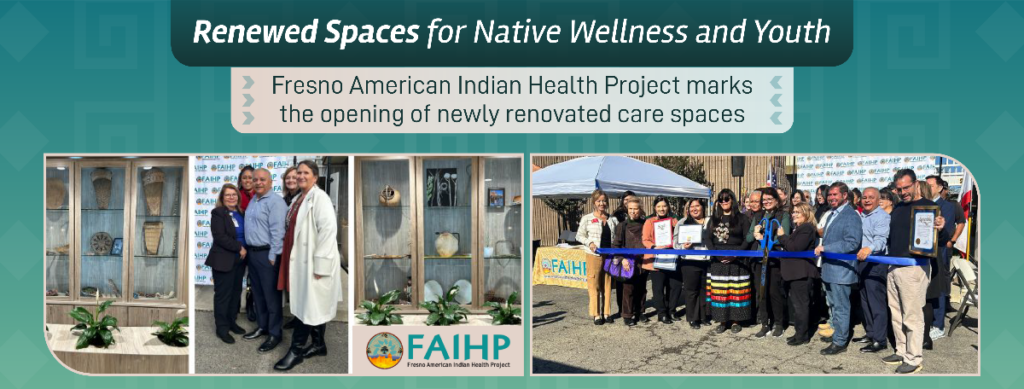
The Fresno American Indian Health Project recently brought together community members, staff and partners to celebrate the opening of its newly renovated Native Wellness and Youth Services spaces. The updated facilities reflect the organization’s continued investment in healthcare and wellness services shaped by community priorities, cultural knowledge and trusted relationships.
Through its Urban Indian Organization spotlight efforts, NCUIH works to recognize the programs, milestones and community-driven work taking place across Indian Country. Urban Indian Organizations interested in sharing a story about their services, accomplishments or community impact may contact NCUIH at [email protected].
Federal appropriations legislation has also advanced with funding increases for urban Indian health and the Indian Health Service. On January 15, 2026, the Senate passed a three-bill fiscal year 2026 appropriations package following passage by the House on January 8.
The legislation provides $8.05 billion for the Indian Health Service and $5.31 billion in advance appropriations for fiscal year 2027. It also includes $95.42 million for urban Indian health, representing a $5 million increase over the fiscal year 2025 enacted amount.
The legislation reaffirms Senate report language directing the Indian Health Service to explore the creation of an interagency working group focused on supporting Urban Indian Organizations. Advance appropriations provide funding in the following fiscal year, helping the Indian Health Service and supported programs plan services with greater stability and predictability.
A bipartisan public-safety bill endorsed by NCUIH has also advanced in Congress. The Bridging Agency Data Gaps and Ensuring Safety for Native Communities Act, known as the BADGES for Native Communities Act, unanimously passed the Senate on December 12, 2025, and moved to the House for consideration.
The legislation was reintroduced in February 2025 by Senators Catherine Cortez Masto, John Hoeven, Ruben Gallego and Mike Rounds. The bill is intended to strengthen Tribal public safety by improving federal coordination, data sharing and support for Native communities.
NCUIH has also joined the Partnership for Medicaid in urging the Centers for Medicare and Medicaid Services to provide clear guidance protecting American Indian and Alaska Native Medicaid beneficiaries.
In a letter submitted on November 25, 2025, the partnership asked CMS to clearly reiterate that American Indian and Alaska Native beneficiaries are exempt from new Medicaid requirements created under the One Big Beautiful Bill Act. Clear federal guidance can help states implement the exemptions correctly and prevent eligible Native patients from facing unnecessary barriers or interruptions in their healthcare coverage.
January 23 is Maternal Health Awareness Day, offering an opportunity to recognize both the challenges and strengths associated with Native maternal health. NCUIH provides resources addressing maternal healthcare access, culturally responsive support and the experiences of American Indian and Alaska Native mothers, families and communities.
NCUIH has also released Strategy Guide 1: Strengthening Behavioral Health Access Through Medicaid, a new resource focused on improving behavioral healthcare access by optimizing Medicaid reimbursement.
The guide explains how Urban Indian Organizations and Indian healthcare providers can collaborate with state Medicaid agencies, pursue relevant provider designations and explore models such as Primary Care Case Management. These strategies can help organizations improve financial sustainability, expand behavioral health services and respond more effectively to the needs of Native patients and communities.
Another available resource, Using SMART Objectives and Logic Models to Drive Innovation, provides practical guidance for organizations and healthcare professionals working to turn broad ideas into clear and measurable programs.
The recorded webinar explains how SMART objectives and logic models can help organizations connect vision to action, align their programs with community priorities and demonstrate impact. These tools can support program planning, evaluation, grant development and communication with funders and community partners.
Updated outreach materials are also available for the 988 Suicide and Crisis Lifeline. The new resources include a refreshed fact sheet explaining what 988 is, what individuals can expect when contacting the service and answers to frequently asked questions.
Additional materials explain the difference between contacting 988 and calling 911. These resources can help Urban Indian Organizations and community partners share clear and accurate information about which service may be appropriate during a behavioral health crisis or an immediate emergency.
Urban Indian Organizations may also request research and data support through NCUIH’s Research and Public Health Programs Division. The team assists organizations in locating current, relevant and culturally responsive information tailored to their specific programs, communities and planning needs.
Available assistance may include population, housing, education, income and poverty statistics. NCUIH may also help organizations locate UIO revenue data, medical or clinical record information, health behavior data and preventive healthcare statistics.
This support can assist Urban Indian Organizations with program development, community needs assessments, grant applications, policy advocacy and evaluation. Organizations can submit a request based on their specific research questions and data needs.
NCUIH will also present Strengthening Vaccine Confidence in Native Communities: Mass Media and Outreach Strategies on January 21, 2026, from 2 to 2:40 p.m. Eastern Time.
The virtual event is the second session in the Strengthening Vaccine Confidence in Native Communities Community of Learning series. Participants will explore how mass media, digital outreach and trusted community messengers can support informed vaccine decision-making and improve community wellness.
The session will feature practical communication strategies and real-world examples from Urban Indian Organizations engaged in digital vaccine promotion. Participants will learn approaches for sharing accurate health information, strengthening trust and creating vaccine outreach that reflects the needs and experiences of American Indian and Alaska Native communities.