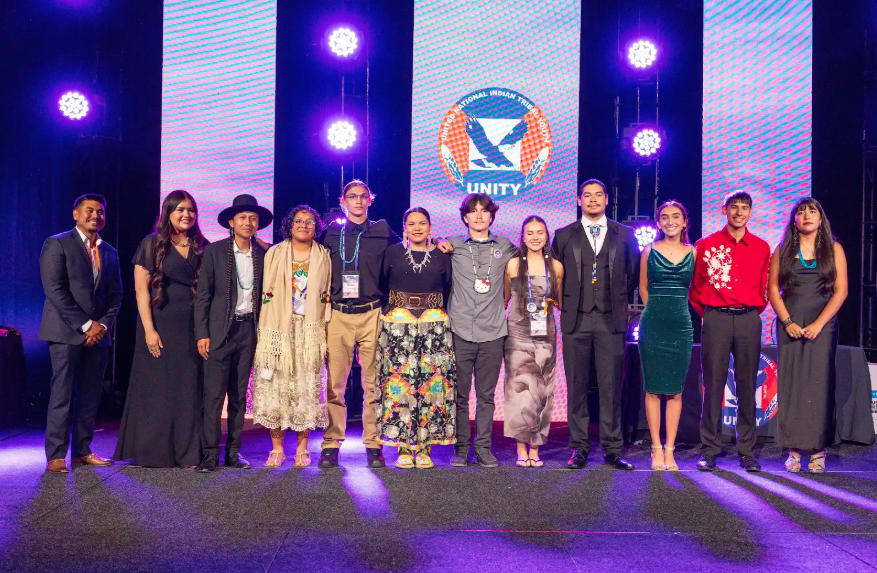
At the National UNITY Council (NUC) Business Meeting on June 30, 2025, during the National UNITY Conference in San Diego, California, more than 130 Native youth leaders representing over 60 affiliated youth councils across 23 states gathered to identify the most urgent challenges facing their peers and communities. Guided by both regional discussions and survey feedback from over 936 respondents from over 300 youth councils, nationally, these Youth Council Representatives formally adopted the Top Ten Issues Facing Native Youth for 2025–2026.
These issues reflect the lived realities of Native youth nationwide and serve as a call to action for collective impact and meaningful change. UNITY’s approach ensures that each council’s grassroots efforts are not isolated, but instead connected to a powerful national movement. By aligning goals across hundreds of youth councils, shared challenges become opportunities for shared success. Each project, whether a local school initiative or a tribal community-wide program, contributes to a ripple effect—strengthening Native youth leadership, advancing well-being, and amplifying Native voices.
UNITY’s model goes beyond identifying problems—it equips Native youth with the tools, resources, and training needed to take a solution-based approach. By addressing these challenges through innovative community service projects, Native youth leaders are empowered to make a tangible difference in their communities while contributing to UNITY’s broader mission of building stronger, healthier Native communities.
CALL TO ACTION: YOUTH COUNCIL EVENT IDEAS
Each youth council is empowered to host four community service projects annually, creating ripple effects of change throughout their regions. These projects embody UNITY’s solution-based approach, addressing the most common challenges Native youth face while inspiring others to succeed and feel seen. By fostering a culture of action and accountability, UNITY sets the stage for national movement-building rooted in the strengths and resilience of Native youth. See below the list of possible Youth Council projects to address one or more of the top ten issues between August 2025 and June 2026.
1. Substance Abuse
Alcohol and drug use, along with negative coping mechanisms
- Host prevention workshops led by Native health professionals or Elders.
- Launch peer-led recovery or wellness support groups.
- Organize “Sober Fun Night” events that offer positive alternatives.
- Create a social media PSA campaign sharing Native youth recovery stories.
2. Mental Health Disparities
Including PTSD, anxiety, depression, and lack of access to services
- Start wellness circles with guided talking sessions and peer support.
- Partner with clinics to offer free counseling days.
- Hold stress-relief activities like art therapy or traditional crafts.
- Advocate for stronger tribal and school mental health policies.
3. Generational Trauma
Rooted in family separation, violence, and incarceration
- Organize intergenerational storytelling nights to promote healing.
- Host workshops to reclaim cultural practices disrupted by colonization.
- Volunteer with programs supporting families impacted by incarceration.
- Develop youth-led projects documenting resilience and survival stories.
4. Health Disparities
High rates of diabetes, chronic illness, and unequal access to care
- Offer healthy cooking classes featuring traditional foods.
- Start youth fitness challenges or running clubs.
- Host diabetes screenings in partnership with tribal health clinics.
- Develop school garden projects to promote fresh produce access.
5. Lack of Native Representation in Education
Omission or misrepresentation of Native peoples in the curriculum
- Advocate for inclusion of local tribal history in school programs.
- Create youth-led presentations for classrooms on Native heritage.
- Partner with libraries to highlight Native authors and literature.
- Produce videos or podcasts featuring Native youth voices.
6. Violence Against Native People
Including MMIP, MMIW, and MMIW2S+ crises
- Organize awareness walks or candlelight vigils.
- Partner with shelters or advocacy groups to collect supplies.
- Host workshops on consent, boundaries, and healthy relationships.
- Create art exhibits honoring those lost to violence.
7. Bullying and Lateral Violence
Peer aggression and harmful internalized behaviors
- Establish peer mentorship or “buddy” programs.
- Launch kindness campaigns with posters, videos, and activities.
- Host conflict resolution and communication skills workshops.
- Organize “Unity Days” promoting solidarity among students.
8. Suicide and Self-Harm Prevention
Ongoing mental health crises among Native youth
- Promote “I Will Live” campaigns with positive prevention messaging.
- Train youth in gatekeeper or safeTALK suicide prevention programs.
- Organize outdoor wellness activities like healing hikes.
- Distribute resource guides connecting youth to immediate help lines.
9. Problems at Home
Domestic violence, child abuse, and neglect
- Volunteer with family support or child advocacy centers.
- Train youth councils to recognize abuse and connect to resources.
- Host positive parenting and caregiver education workshops.
- Develop safe-space mentorship programs for peers in need.
10. High Dropout Rates
Particularly in high school and post-secondary education
- Organize peer study groups or tutoring programs.
- Host college and career readiness nights with local partners.
- Facilitate scholarship workshops with UNITY alumni.
- Pair youth with Native professionals for career shadowing.
Transforming Issues into Opportunities
The Top Ten Issues of 2025–2026 are more than a list—they represent a movement led by Native youth across the nation. Through grassroots service, advocacy, and cultural renewal, UNITY youth councils are transforming challenges into opportunities for collective action and hope.
By taking ownership of these issues and aligning efforts nationally, Native youth are proving that service is power. Together, they are building healthier communities, strengthening cultural identity, and leading with resilience for generations to come.